Schedule Appointment

Carpal Tunnel Syndrome Treatment in Central, Kentucky

Carpal Tunnel Syndrome (CTS) occurs when the median nerve, which runs through the wrist, becomes compressed. This can lead to tingling, numbness, weakness, or pain in your hand and fingers making daily tasks like typing, gripping, or even sleeping uncomfortable. At Bluegrass Orthopaedics, our fellowship-trained hand and wrist specialists are skilled in diagnosing and treating CTS using the full spectrum of care from non-surgical therapies to the most modern, minimally invasive surgical options.

BGO Carpal Tunnel Syndrome Treatment

What Causes Carpal Tunnel and Why Early Care Matters

Carpal tunnel is caused by pressure on the median nerve inside your wrist often due to repetitive motion (such as typing), swelling, or anatomical factors. If left untreated, prolonged compression can damage the nerve, potentially leading to persistent weakness and reduced function. Early evaluation helps us relieve pressure before lasting nerve injury develops.


Carpal Tunnel Symptoms You May Be Experiencing

  • Numbness or tingling in the thumb, index, middle, and part of the ring finger
  • Hand or wrist pain, especially at night or first thing in the morning
  • Weakness in the hand or difficulty gripping objects
  • A sensation of swelling in the fingers (even if no visible swelling is present)
  • Burning, aching, or shock-like pain that may travel up the arm
  • Dropping objects due to reduced hand strength or sensation

BGO Carpal Tunnel Treatment

Bluegrass Orthopaedics

Why Choose Bluegrass Orthopaedics for Carpal Tunnel Treatment

  • Regional Leading Expertise: Dr. Victor Marwin is the first fellowship-trained hand surgeon in Kentucky to perform minimally invasive, ultrasound-guided carpal tunnel release. His experience makes him a top choice in the region for both standard and advanced CTS treatment.
  • Full Range of Treatment Options: From bracing and injections to cutting-edge in-office UltraGuideCTR™ release, open surgery, or endoscopic methods, we offer the right solution for your situation.
  • Patient-Centered Care: Your treatment plan is based on your symptoms, work/life demands, and preferences. We guide you every step of the way — through diagnosis, treatment, and recovery.
  • Convenient, Modern Facilities: Our clinics offer procedure rooms, imaging, and therapy all in one place — making follow-up and recovery smoother and more accessible.
  • Proven Clinical Outcomes: Our in-office ultrasound-guided releases are backed by rigorous outcomes data showing safety, fast recovery, and lasting symptom relief.
BGO Carpal Tunnel Treatment

Non-Surgical Treatment Options

We often begin with conservative measures to relieve symptoms and restore function:

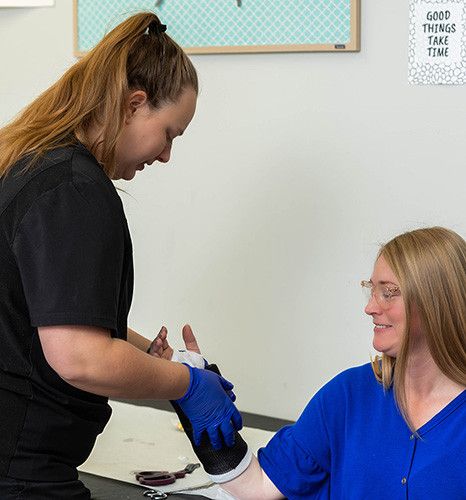
  • Wrist Splinting: Wearing a brace, especially at night, helps keep your wrist in a neutral position and reduces nerve irritation.
  • Activity Modification: Adjusting how you use your hands, using ergonomic tools, and avoiding repetitive pressure can make a big difference.
  • Therapy (Physical/Occupational): Targeted exercises can improve nerve gliding, stretch tight structures, and build wrist and hand strength.
  • Injections: A corticosteroid injection into the carpal tunnel can reduce inflammation and ease symptoms, sometimes temporarily.

Surgical Treatment Options & Recovery Comparisons

Ultrasound-Guided (In-Office) Carpal Tunnel Release

  • Performed in our office no hospital or surgical center needed.
  • Uses real-time ultrasound and a specialized microblade (UltraGuideCTR™) for precision.
  • Typically done under local anesthesia, no need for general anesthesia or sedation.
  • Very small incision (a few millimeters); in many cases, no stitches are needed.
  • Rapid recovery: in a large multicenter study, the median time to resume normal daily activities was 2 days, and return to work was 4 days.
  • High satisfaction rates: 94% of patients reported satisfaction in the same study.
  • Clinical data show significant symptom improvement early (within weeks) and sustained benefit through at least one year.

Open Carpal Tunnel Release (Hospital or Outpatient Surgery Center)

  • Traditional surgical method involving a larger incision in the palm.
  • Requires stitches and is typically performed in a hospital or outpatient surgery center.
  • Recovery takes longer than in-office release; you may need several weeks to heal fully, and grip strength returns more gradually.

Endoscopic Carpal Tunnel Release (Hospital or Outpatient Surgery Center)

  • Uses a small camera (scope) to guide the release with a smaller incision.
  • Must be done in a surgery center or hospital.
  • Recovery is faster than open surgery, but usually not as fast as in-office ultrasound-guided release.

How We Decide What’s Right for You

At Bluegrass Orthopaedics, treatment is a collaborative process:

  • Evaluation: We’ll review your symptoms, medical history, and lifestyle demands. We may perform a physical exam and nerve testing.
  • Discussion of Options: We’ll walk through non-surgical vs. surgical approaches, including which type of surgery may make sense for you, based on your goals, job, and recovery expectations.
  • Customized Plan: If surgery is recommended, we’ll help you choose the method that fits your needs — and explain clearly what to expect before, during, and after.
  • Support for Recovery: You’ll receive a post-treatment plan, including wound care, when it’s safe to use your hand, and therapy if needed.

Carpal Tunnel Syndrome - Frequently Asked Questions

How soon after surgery will I be able to use my hand?
  • With in-office ultrasound-guided release, many patients resume normal hand use within a few days.
  • For open or endoscopic surgery, recovery may take a few weeks, with with full recovery taking anywhere from six weeks to six months, depending on the specific procedure, the patient's overall health, and how well post-operative care instructions are followed
What kind of anesthesia will I need?
  • In-office release: typically just local anesthesia.
  • Open or endoscopic surgery: may require regional or general anesthesia, depending on the case.
Will I have stitches?
  • In-office ultrasound-guided: often no stitches; small incision closed with adhesive strips.
  • Open or endoscopic: usually require sutures.
What about pain management after ultrasound guided carpal tunnel release?
  • Most patients undergoing in-office release need only over-the-counter pain relievers such as ibuprofen or acetaminophen.
If I previously had open or endoscopic carpal tunnel release that failed, am I a candidate for ultrasound guided carpal tunnel release?
  • You may still be a candidate for ultrasound-guided carpal tunnel release, even if you previously underwent open or endoscopic surgery. Our specialists will carefully evaluate your symptoms and surgical history to determine the best approach. Many of Dr. Marwin’s patients who had prior carpal tunnel procedures were initially hesitant to try another treatment — but they often experienced significantly improved results with the minimally invasive, ultrasound-guided technique.