Schedule Appointment

Distal Radius Fracture Treatment in Central, Kentucky

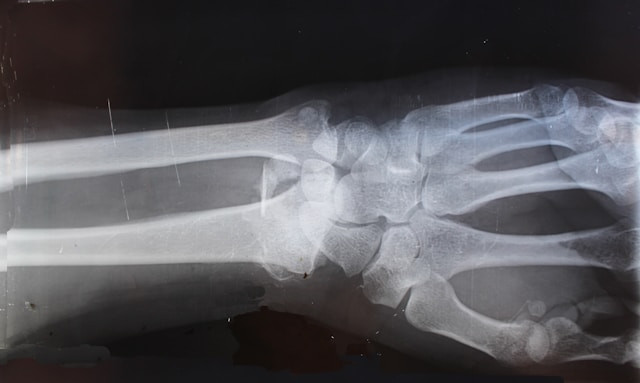
A distal radius fracture, often called a wrist fracture, occurs when the larger forearm bone breaks near the wrist. This injury is commonly caused by falls onto an outstretched hand and may involve joint displacement or ligament damage.

BGO Distal Radius Fracture Treatment
BGO Distal Radius Fracture

What Causes Distal Radius Fracture and Why Early Care Matters

A distal radius fracture, often called a “broken wrist”, happens when the radius bone near the wrist breaks. This injury usually occurs from falling onto an outstretched hand, especially during sports, slipping on ice, or accidents. It can also result from high-energy trauma like car or bike crashes, or occur more easily in older adults with weaker bones due to osteoporosis.

Getting early medical care is important because it helps ensure the bone heals in the correct position. Without prompt treatment, the wrist may heal poorly, leading to chronic pain, limited motion, weakness, or arthritis down the road. Early evaluation also helps detect associated injuries, reduce swelling, and start the right treatment whether that’s a cast, splint, or surgery so you can recover faster and more fully.


Symptoms You May Be Experiencing

If you’re wondering whether your hand discomfort could be carpal tunnel, here are common signs to watch for:

  • Immediate wrist pain after a fall or impact
  • Swelling around the wrist and hand
  • Bruising or discoloration that develops shortly after the injury
  • Difficulty moving the wrist or fingers
  • Weak grip strength
  • Visible deformity of the wrist (sometimes described as a “dinner-fork” shape)
  • Tenderness to touch along the radius near the wrist
  • Numbness or tingling in the fingers if swelling affects nearby nerves

BGO Distal Radius Fracture Treatment

Bluegrass Orthopaedics

Why Choose Bluegrass Orthopaedics for Distal Radius Fracture Treatment

  • Orthopaedic trauma and hand specialists
    Our team includes fellowship-trained surgeons who specialize in complex wrist and hand injuries. They evaluate your fracture with precision, ensuring you receive expert care tailored to the type and severity of your injury.
  • Advanced imaging for accurate fracture assessment
    We use state-of-the-art tools including digital X-rays, ultrasound, and CT scans when needed to clearly visualize the fracture pattern. This allows us to determine the best treatment plan and identify any joint involvement or associated injuries.
  • Expert casting, bracing, and surgical treatment
    From custom-molded casts and supportive braces to minimally invasive or reconstructive surgical options, we offer the full spectrum of treatment. Our goal is to realign and stabilize the wrist so it heals properly and minimizes long-term complications.
  • Rehabilitation plans to restore strength and mobility
    Once the fracture begins to heal, our therapy team guides you through personalized exercises to improve range of motion, rebuild strength, and return you safely to daily activities, work, and sports.
BGO Carpal Tunnel Treatment

Non-Surgical Treatment Options

We often begin with conservative measures to relieve symptoms and restore function:

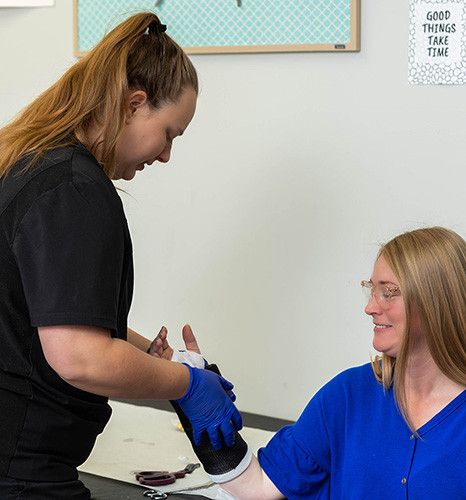
  • Splinting or Casting: Stabilizes the wrist and allows the bone to heal in the correct position.
  • Closed Reduction: Realigns the fracture by hand if the bone is slightly displaced.
  • Bracing: A removable brace may be used as healing progresses for added support.
  • Pain & Swelling Control: Ice, elevation, and appropriate medications.
  • Physical Therapy: Guided exercises to restore motion, strength, and function after immobilization.

FAQs

How do wrist fractures happen?

Most occur from falls or direct trauma.

Do all fractures need surgery?

No. Many heal with casting alone.

How long does healing take?

Most fractures heal in 6–8 weeks.

Will I need therapy?

Therapy restores strength, mobility, and function.

Surgical Treatment Options & Recovery Comparisons for Distal Radius Fractures

    Volar Plate Fixation (Open Reduction and Internal Fixation – ORIF)

    • The most common modern surgical treatment for unstable distal radius fractures.
    • Performed through a small incision on the palm side of the wrist.
    • A low-profile metal plate and screws are used to realign and stabilize the broken bone.
    • Allows early wrist motion—often starting within 1–2 weeks after surgery.
    • Recovery is typically quicker and more predictable compared with other methods.
    • Patients often regain strength and function sooner, making it ideal for active individuals.

    External Fixation

    • Stabilizes the fracture using pins connected to an external frame.
    • Often used for high-energy injuries, open fractures, or when swelling prevents immediate internal fixation.
    • Wrist motion may be more limited during early healing compared with volar plating.
    • Recovery can be longer, and patients may need more therapy to restore full motion.

Percutaneous Pinning (Closed Reduction + Pins)

    • Minimally invasive option when the fracture can be aligned without a large incision.
    • Pins are placed through the skin to hold the bone in place while it heals.
    • Typically used for simpler fracture patterns.
    • Pins remain for several weeks, and the wrist is usually immobilized in a cast or brace—leading to a slower return to motion compared with volar plating.

Fragment-Specific Fixation

  • Involves small plates or screws targeted to specific broken fragments.
  • Useful when the fracture is very complex or involves multiple joint surfaces.
  • Recovery varies depending on fracture severity but can offer improved alignment for difficult injuries.

How We Decide What’s Right for You

At Bluegrass Orthopaedics, treatment is a collaborative process:

  • Evaluation: We’ll review your symptoms, medical history, and lifestyle demands. We may perform a physical exam and nerve testing.
  • Discussion of Options: We’ll walk through non-surgical vs. surgical approaches, including which type of surgery may make sense for you, based on your goals, job, and recovery expectations.
  • Customized Plan: If surgery is recommended, we’ll help you choose the method that fits your needs — and explain clearly what to expect before, during, and after.
  • Support for Recovery: You’ll receive a post-treatment plan, including wound care, when it’s safe to use your hand, and therapy if needed.