What Causes Trigger Finger Syndrome and Why Early Care Matters
Trigger finger syndrome occurs when the flexor tendon in your finger becomes irritated or inflamed, usually from repetitive gripping, forceful hand use, or underlying conditions that affect tendon health—such as diabetes, rheumatoid arthritis, or thyroid disorders. This irritation leads to swelling and thickening of the tendon or the surrounding pulley, narrowing the space where the tendon should glide smoothly. As a result, the tendon catches during movement, causing the characteristic clicking, locking, or stiffness.
Why Early Care Matters:
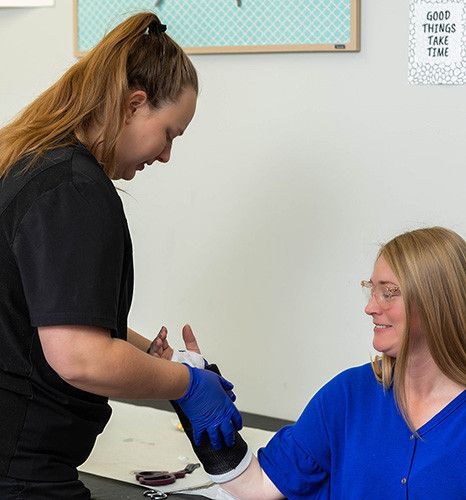
Early treatment can stop trigger finger from progressing to more painful or persistent locking. Conservative options—like rest, splinting, anti-inflammatories, or injections—work best in the early stages when swelling is easier to reduce. Delaying care allows stiffness to worsen and may increase the need for surgery. Acting early helps preserve hand strength, motion, and everyday function.
Symptoms You May Be Experiencing
If you’re wondering whether your finger discomfort could be trigger finger, here are common signs to watch for:
- Finger stiffness, especially in the morning
- A popping, clicking, or catching sensation when bending or straightening the finger
- Pain or tenderness at the base of the affected finger or thumb
- Finger locking in a bent position that may suddenly straighten
- A noticeable bump or nodule at the base of the finger
- Reduced range of motion in the affected finger


Why Choose Bluegrass Orthopaedics for Trigger Finger Syndrome Treatment
- Specialty hand and wrist expertise. Bluegrass Orthopaedics has a dedicated “Hand & Wrist” team of surgeons and therapists experienced in tendon injuries, nerve issues, and conditions like trigger finger.
- Comprehensive care under one roof. From diagnosis to non-surgical treatment (splints, therapy, injections) and — when needed — minimally invasive surgery and post-op hand therapy. This makes it easier to get continuous care without juggling multiple providers.
- Personalized treatment plans. Our team tailors care depending on severity — for some, splinting, therapy or injections may work; for others, surgery may be advised. This ensures you’re not pushed into surgery if milder treatments might suffice.