Schedule Appointment

Oxford Cementless Knee Replacement in Central Kentucky

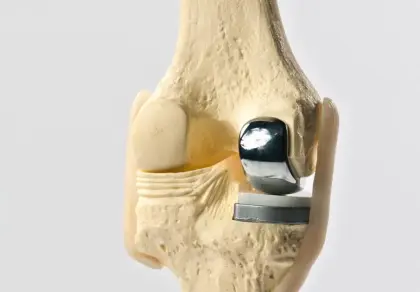
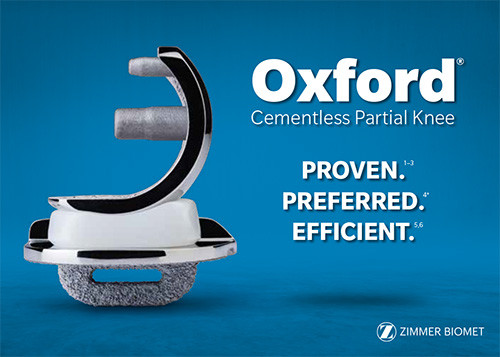
When knee arthritis affects only one part of the joint, often the medial (inner) compartment, a total knee replacement may be more than what’s needed. The Oxford Cementless Partial Knee Replacement offers a bone-preserving, minimally invasive option that replaces only the damaged portion of the knee. Using a specialized implant that bonds naturally to your bone (without cement), this procedure helps reduce pain, restore mobility, and preserve healthy structures for a more natural knee feel and faster recovery.

BGO Oxford Cementless Knee Replacement

Benefits of Oxford Cementless Knee Replacement at BGO

Choosing a cementless partial knee replacement can offer patients:

  • Long-term biologic fixation as bone grows naturally into the implant
  • Preservation of healthy bone, cartilage, and ligaments
  • Less invasive surgery with smaller incisions and less soft-tissue disruption
  • Faster recovery and earlier return to activity compared with total knee replacement
  • A more natural-feeling knee thanks to the mobile-bearing implant design
  • Strong long-term durability with low rates of implant loosening
  • Reduced hospital time often performed as an outpatient or short-stay surgery

How the Procedure Works

  • The surgeon makes a small incision and removes only the damaged portion of the knee, typically in the medial compartment.
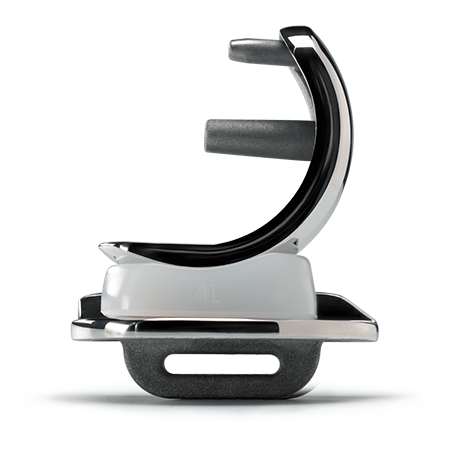
  • The femur and tibia surfaces are prepared with precision to accept the Oxford implant components.
  • A mobile-bearing insert is placed between the metal components to replicate the function of a natural meniscus and allow smooth, natural motion.
  • Because the implant is cementless, its porous surface encourages your bone to grow directly into it, creating a secure, long-lasting bond without bone cement.
  • Healthy bone, cartilage, and ligaments, including the ACL and PCL, are preserved, supporting more natural movement and stability than a total knee replacement.
  • Patients typically begin rehabilitation shortly after surgery, often returning to normal daily activities sooner than with a full knee replacement.

Who Is a Good Candidate?

Oxford Cementless Knee Replacement may be appropriate for individuals who:

  • Have knee arthritis limited to a single compartment (most commonly the medial side)
  • Maintain good bone quality capable of supporting bone-ingrowth fixation
  • Wish to preserve healthy bone and ligaments for a more natural knee feel
  • Prefer a minimally invasive procedure with quicker recovery
  • Are committed to post-operative physical therapy and rehab
  • Do not have widespread arthritis throughout the knee, inflammatory arthritis, or major deformity

A full evaluation at BGO including imaging, alignment assessment, and bone-quality review helps determine if this option is right for you.
Bluegrass Orthopaedics

Why Choose Bluegrass Orthopaedics

At BGO, patients benefit from:

  • Fellowship-trained orthopedic surgeons experienced in partial and cementless knee replacement techniques
  • State-of-the-art implant technology designed for bone preservation and long-term stability
  • A comprehensive care model including diagnostics, surgery, and on-site physical therapy
  • A patient-first approach with individualized treatment plans
  • Decades of combined experience treating knee arthritis and performing advanced joint-preservation surgeries

Oxford Cementless Knee Replacement - Frequently Asked Questions

How is a partial knee replacement different from a total knee replacement?

A partial knee replacement treats only the damaged portion of the joint, preserving healthy bone and ligaments. It typically results in smaller incisions, faster recovery, and a more natural knee feel compared to a total knee replacement.

What is the advantage of a cementless implant?

Cementless implants allow natural bone growth into the implant surface, creating strong biologic fixation. This avoids potential issues related to cement over time and may improve long-term implant stability.

How long does recovery take?

Many patients begin walking soon after surgery and return to daily activities within several weeks. Full recovery depends on individual healing and adherence to physical therapy.

Is this procedure right for active patients?

Yes — cementless partial knee replacement is often ideal for active individuals who have localized arthritis and want to maintain a natural-feeling, stable knee for daily and athletic activities.

What are the risks or limitations?

Risks include infection, implant wear, loosening, or arthritis developing in other parts of the knee. Because only one compartment is replaced, some patients may eventually need additional surgery if arthritis progresses.