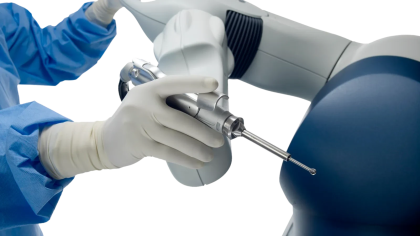
Experience Precision Knee Replacement Surgery
with Mako SmartRobotics™
What are the Benefits of Robotic Knee Replacement Surgery?
Your dedicated Bluegrass Orthopaedics team can walk you through every aspect of the surgery before your procedure. Some benefits of robotic knee replacement surgery include:
- Minimal trauma to the surrounding tissues
- Faster recovery time
- Less postoperative pain
- Minimal scarring
- Outpatient surgery
- Reduced blood loss and need for transfusion
- Improved long-term outcomes
Who Is a Good Candidate for Robotic Knee Replacement Surgery?
A good candidate for robotic-assisted knee replacement surgery typically includes patients who:
- Have moderate to severe knee arthritis
- Osteoarthritis or other degenerative joint conditions that have not improved with conservative treatments.
- Experience chronic knee pain and stiffness
- Pain that interferes with daily activities such as walking, climbing stairs, or standing for long periods.
- Have limited mobility or loss of knee function
- Difficulty bending or straightening the knee or reduced range of motion.
- Have not found relief with non-surgical treatments
- Physical therapy, medications, injections, activity modification, or bracing have failed to provide lasting relief.
- Are generally healthy enough for surgery
- No uncontrolled medical conditions that would increase surgical risk.
- Have knee anatomy suitable for robotic assistance
- Bone structure and joint alignment that allow the robotic system to create an accurate, personalized surgical plan.
- Want a more personalized surgical approach
- Patients who may benefit from precise implant positioning and improved joint alignment.
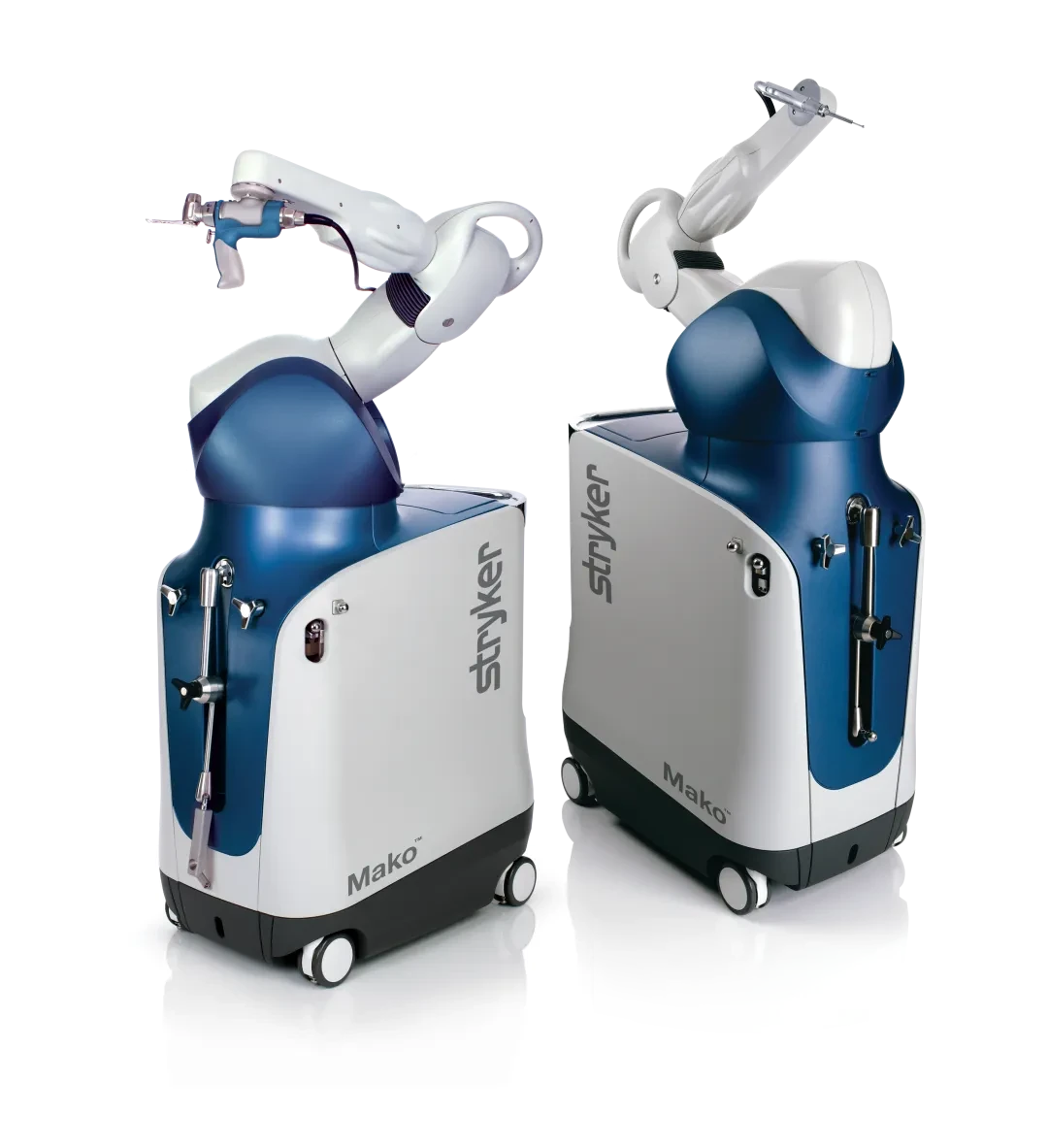
Outpatient Knee Surgery with Mako Smart Robotics™
- Through CT-based 3D modeling of bone anatomy, Bluegrass Orthopaedic surgeons use the Mako System to create a personalized surgical plan.
- The Mako SmartRobotics™ for knee replacement is the only robotic-arm-assisted surgical technology featuring AccuStop™ haptic technology. It offers visual, auditory, and tactile feedback to help limit soft tissue damage during surgery.
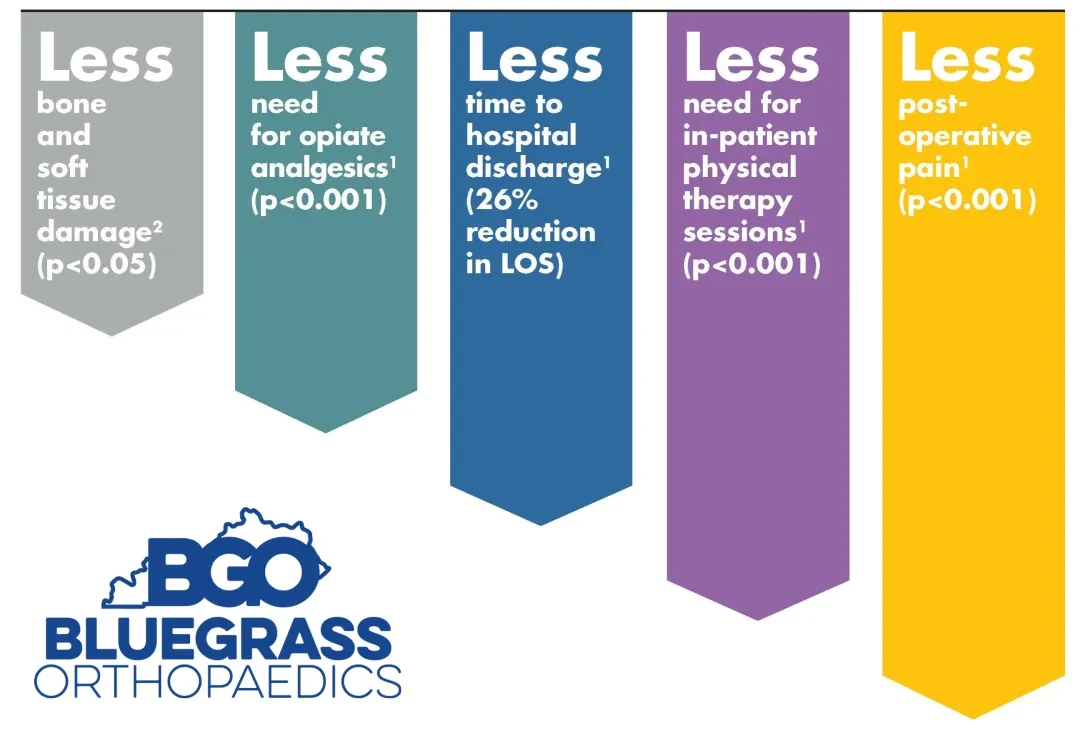
- Mako SmartRobotics™ is associated with reduced pain, fewer opiate analgesics, less inpatient physical therapy, shorter hospital stays, improved knee flexibility, and better soft tissue protection than manual techniques.
What’s the Difference Between a Total Knee and Partial Knee Replacement?
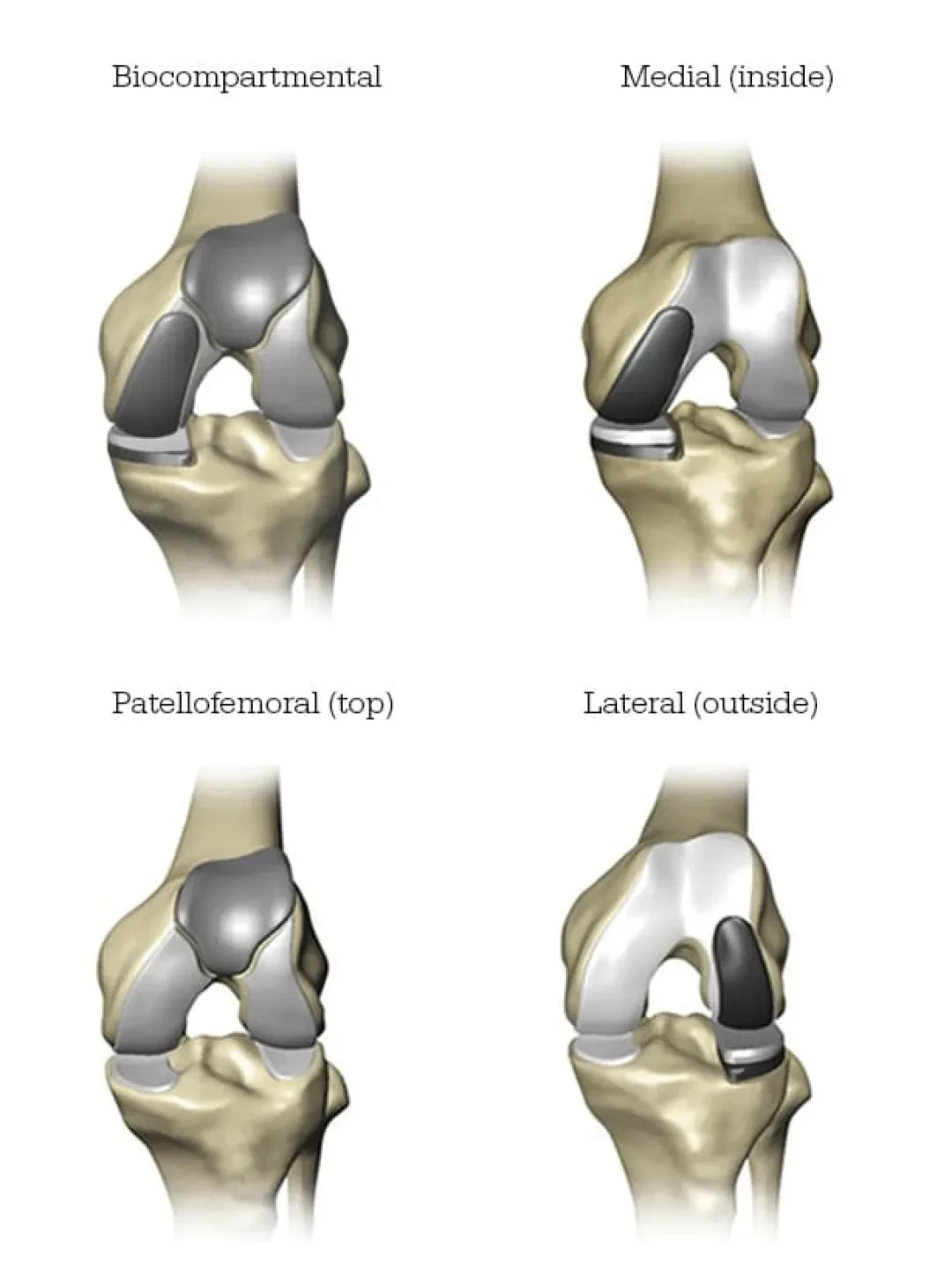
If a patient has severe arthritis in their knee, a surgeon may recommend total or partial knee replacement. Mako SmartRobotics™ for Partial Knee replacement is a treatment option for adults in the early-to-mid stage of osteoarthritis (OA) that has not yet affected all three knee compartments. Depending on where the arthritis is affecting the knee, patients may have an implant inserted in any of the following areas:
In a unicondylar knee replacement, only one area or compartment of the knee joint is replaced. A patellofemoral knee replacement involves replacing both the kneecap (or patella) and the groove at the lower end of the thigh bone (or femur). On the other hand, a bicompartmental knee replacement involves replacing two compartments of the knee—the inside (medial) and the kneecap.
Mako SmartRobotics™ for Total Knee replacement is a medical procedure that can treat adults with mid to late-stage osteoarthritis in their knee. The surgeon replaces the entire knee joint during the procedure and inserts a Triathlon Total Knee implant. Unlike traditional knee replacements, Triathlon knee replacements are designed to work with the body to promote a natural-like circular motion. This implant has over a decade of clinical history and is considered a reliable treatment option.
Mako SmartRobotics™ Orthopedic Expertise at Bluegrass Orthopaedics
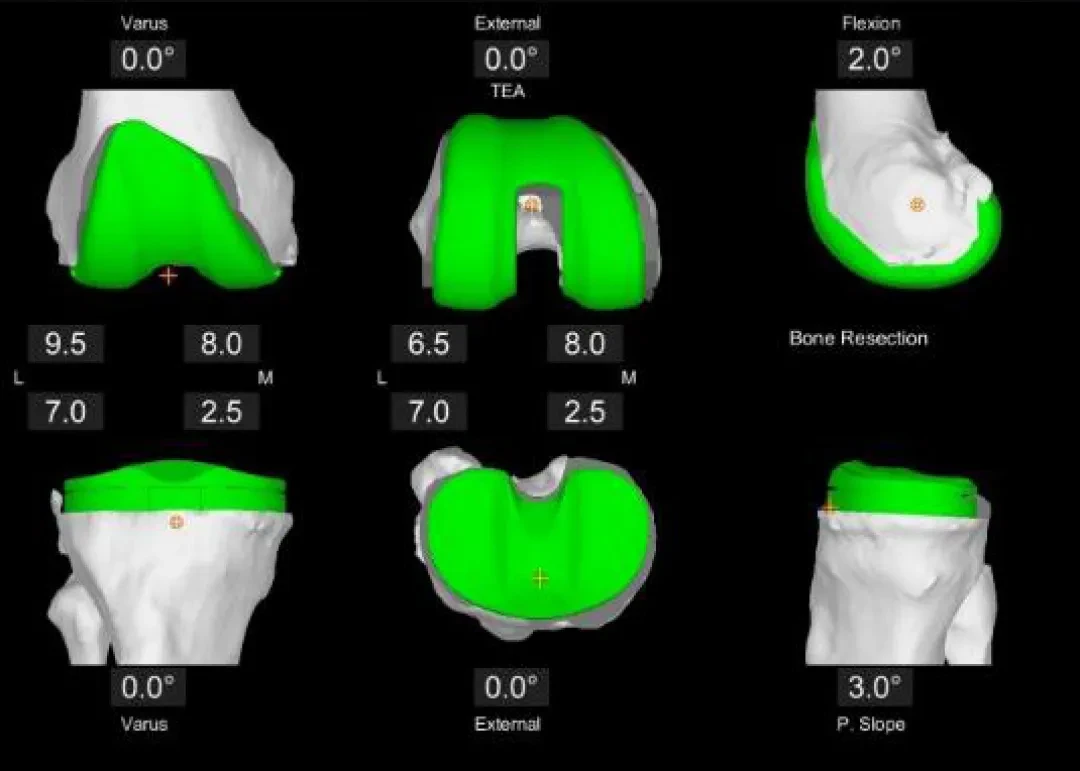
Personalized Surgical Plan: Before knee surgery, a CT scan is taken to create a 3D virtual model of your knee joint. Your orthopedic surgeon then uses this model to assess your bone structure, disease severity, joint alignment, and surrounding bone and tissue. Based on this evaluation, your surgeon will determine your implant's appropriate size, placement, and alignment to ensure the best possible outcome for your knee surgery.
Range-of-Motion Assessment: During your procedure, Mako provides your orthopedic surgeon with real-time data, enabling them to continuously assess the movement and tension of your new joint and make any necessary adjustments to your surgical plan.
Arthritic Bone Removal: During the surgery, your orthopedic surgeon will use Mako's robotic arm to remove the arthritic bone and cartilage from your knee precisely. This process is guided by a virtual boundary that provides tactile resistance to help the surgeon stay within the limits defined in your surgical plan. Once the diseased bone is removed, the implant will be placed into the knee joint. After the successful implant placement, you will be taken to the recovery room, where your journey to strengthen your new joint will begin.
Why Choose Bluegrass Orthopaedics for Knee Replacement Surgery?
- Detailed evaluation and advanced surgical planning
- Specialists use advanced imaging and preoperative planning to assess knee arthritis and determine if Mako robotic-assisted knee replacement is the right option for each patient.
- Robotic-assisted accuracy for personalized care
- Mako technology enables a customized surgical plan and precise bone cuts, helping improve implant alignment and joint balance.
- Minimally invasive approach with controlled execution
- Robotic assistance supports a more controlled procedure, which may lead to less soft-tissue disruption and a smoother recovery for appropriate candidates.
- Experienced joint replacement specialists
- Highly trained orthopaedic surgeons combine advanced technology with expertise to help patients regain mobility, reduce pain, and return to daily activities with confidence.
Mako Robotic-Assisted Videos
BGO & BSSC Welcomes the Mako™ Robot
Mako Robot Patient Testimony
Mako Robot Webinar
Mako Robotic-Assisted Total Joint Animation